Orcutt sits at the south end of the Santa Maria Valley, an unincorporated Santa Barbara County community that grew out of an early oil boom and later became a bedroom suburb. Investors running a 1031 exchange here are usually pricing small commercial buildings and light-industrial space rather than a single large asset, so the identification list often has to work harder than it would in a bigger market.
Old Orcutt and the Bradley Road Split
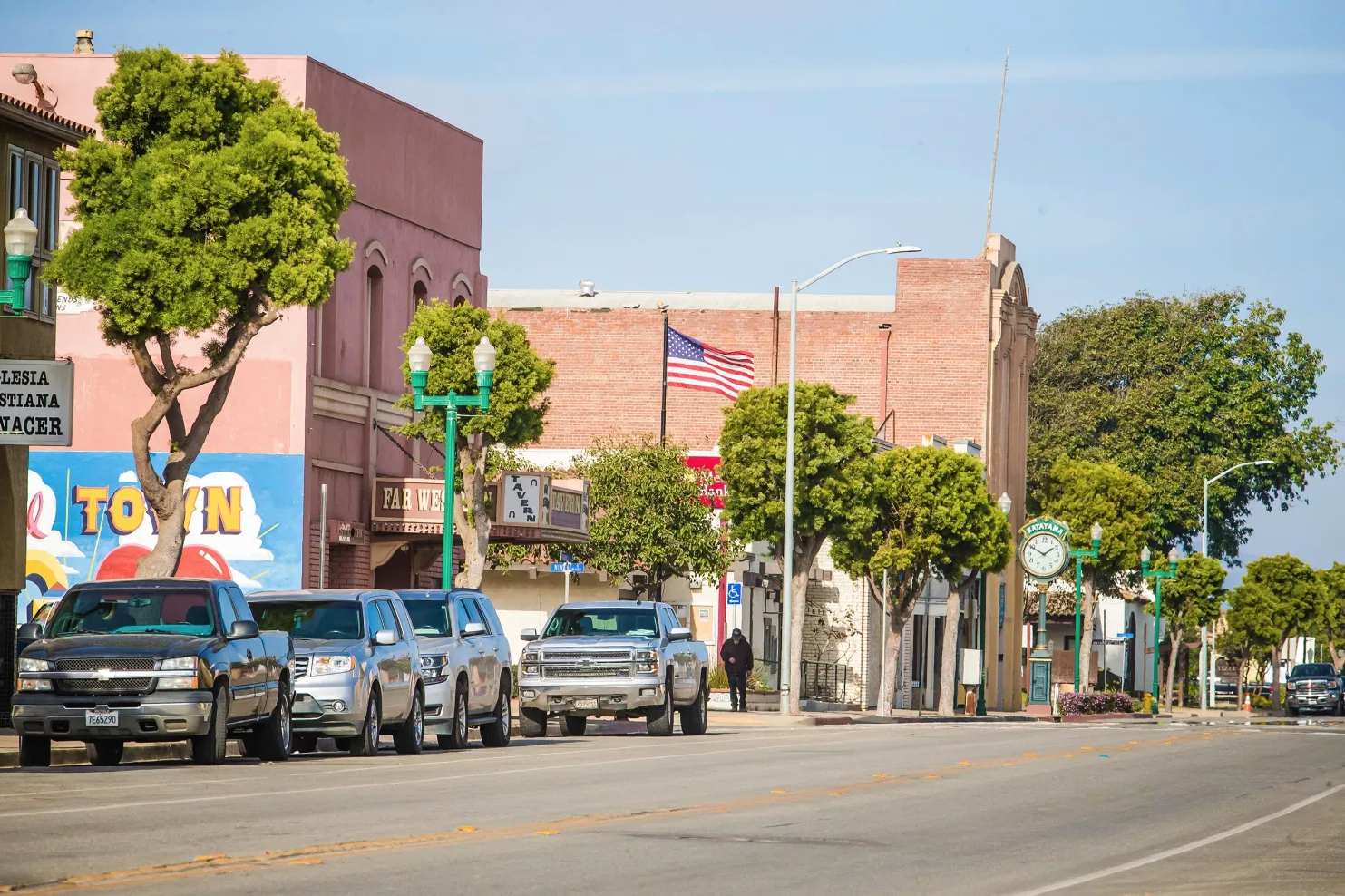
Orcutt reads as two separate commercial zones stitched together by Clark Avenue. Old Orcutt keeps a row of early-1900s brick storefronts built during the town's original oil rush, now filled with small restaurants, antique dealers, and personal-service tenants on short leases. Bradley Road, a mile or so north, carries the newer retail and service commercial: bigger parking fields, national and regional tenants, higher daily traffic counts.
Vandenberg Space Force Base and the aerospace and launch-support contractors that ring it are the closest thing this submarket has to an anchor industry, and that demand shows up more in light-industrial and flex leasing near Santa Maria Public Airport than in retail rent growth.
What Investors Are Sourcing
Replacement candidates in this submarket tend to fall into a short list of building types:
- Small multi-tenant retail strips along Bradley Road
- Light-industrial and flex buildings serving Vandenberg-adjacent contractors
- Mixed-use buildings in the Old Orcutt historic core
- Agricultural-edge parcels moving toward commercial entitlement
- Small professional-office suites serving nearby residential tracts
Reading the Building Before the Lease
Older Old Orcutt buildings carry oil-era bones: original electrical service, unreinforced or partially reinforced masonry, roof assemblies that have been recovered more than once, and foundations that were never designed for current occupancy loads. A specification-level walkthrough — panel capacity, roof membrane condition, structural tie-downs, ADA path of travel — belongs in diligence before the rent roll gets any weight. Bradley Road product is newer and more standardized, but tilt-up shells built for a single big-box user can be expensive to demise for multiple tenants.
Financing also splits along this line. Community and regional lenders are comfortable with small-balance loans secured by the Old Orcutt storefronts; conduit and national balance-sheet lenders generally want the larger, newer Bradley Road buildings.
Identification Against a Thin List
Standalone commercial inventory turns over slowly here, so a 45-day identification list frequently has to reach into Santa Maria and Guadalupe to stay under the three-property rule or to make the 200 percent test work with several smaller assets. Whichever path is used, each named property still needs its own value support, financing plan, and closing calendar rather than borrowing assumptions from Orcutt comparables.
Timing the Relinquished Sale Against North County Escrows
Escrow periods in the Santa Maria Valley tend to run longer than coastal investors expect, partly because small-balance lenders order appraisals from a thin bench of local appraisers and partly because older buildings generate inspection findings that need renegotiation. An investor selling a coastal asset and buying here should assume the replacement escrow will consume most of the remaining exchange period, which argues for opening escrow on the replacement as close to the identification date as the deal allows rather than waiting for a perfect price.
The reverse sequence deserves consideration too. When a strong Orcutt candidate surfaces before the relinquished property has sold, a reverse exchange — with an exchange accommodation titleholder parking the new property — can lock the building down, though the added structuring cost only makes sense when the candidate is genuinely scarce. For most exchanges here, the forward structure with disciplined early escrow timing does the job at lower cost.
Coordinating the Exchange Team
The qualified intermediary holds exchange proceeds and prepares the identification and assignment paperwork, but does not evaluate the replacement property itself. That work sits with the investor, the broker, and — for the tax treatment of any boot, depreciation recapture, or partial-interest structure — the investor's own tax advisor. If the physical inventory in this submarket stays too thin to fill an identification list, a Delaware Statutory Trust position can round out the exchange without adding another building search.
Common 1031 Exchange Questions
How much standalone commercial inventory is usually available in Orcutt at one time?
Very little. Old Orcutt and the Bradley Road corridor together hold a small number of stabilized buildings, so investors often build their identification list around one Orcutt property plus backups in Santa Maria.
Does the aerospace employment base at Vandenberg change how a replacement property should be underwritten?
It matters most for light-industrial and flex space, where contractor-driven demand supports occupancy. It has little direct effect on Old Orcutt retail leasing.
Should financing look different for an Old Orcutt storefront than for Bradley Road retail?
Usually yes. Older Old Orcutt buildings are more likely to clear with a community or regional lender comfortable with small-balance, older-building risk, while newer Bradley Road product fits conventional commercial underwriting more easily.
What backup identification strategy is common for an Orcutt exchange?
Naming a Santa Maria or Guadalupe property alongside the primary Orcutt candidate under the three-property rule, so the exchange is not dependent on a single thin submarket.
Is a Delaware Statutory Trust a reasonable option if no Orcutt building fits the exchange timeline?
It can be, particularly for investors who want passive replacement property rather than another building search; a tax advisor should confirm the structure fits the specific exchange.