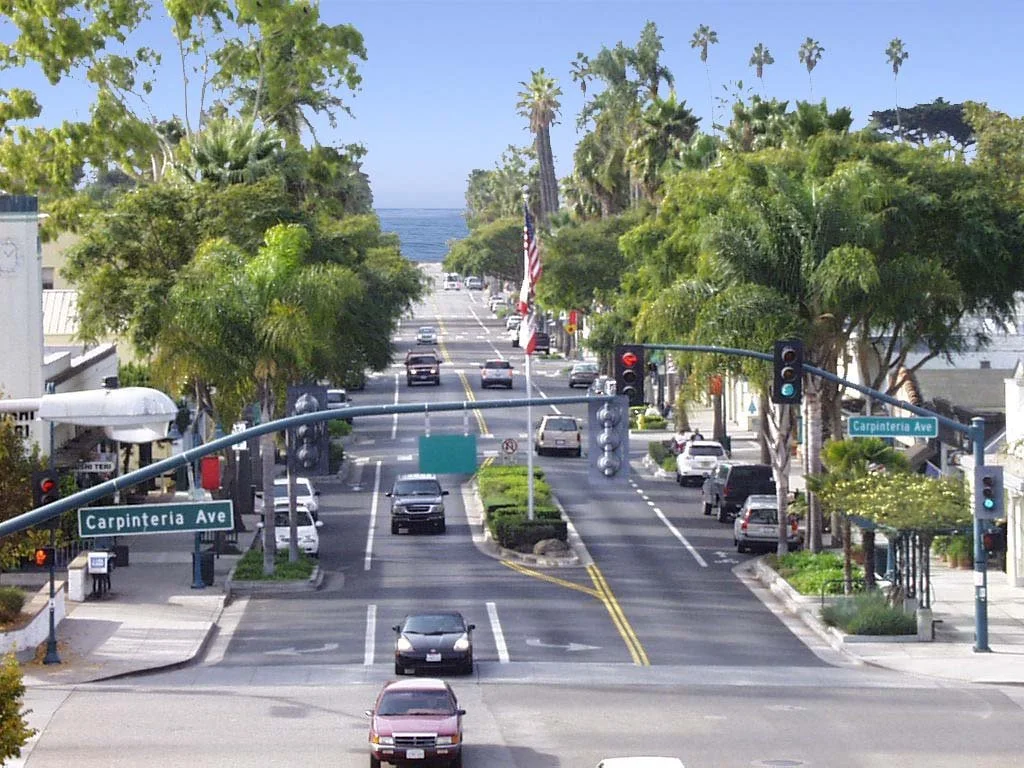
Santa Barbara is a supply-constrained coastal city where the buildings that trade are older, smaller, and more contested than their price tags suggest. A 1031 exchange run here is less about choosing among abundant inventory and more about getting a defensible identification list together before the 45-day window closes on a market that rarely cooperates.
State Street, the Funk Zone, and the Apartment Pockets
Lower State Street remains the city's retail spine, though its tenant mix has been shifting from traditional storefront retail toward restaurants, fitness, and experience-driven uses, and the promenade closure of several blocks to vehicles changed how frontage value is assessed there. The Funk Zone, between State Street and the waterfront, converted a district of warehouses and light-industrial buildings into tasting rooms, galleries, and food tenants, and those adaptive-reuse buildings now trade as some of the most sought-after small commercial assets in the city. Meanwhile most of the multifamily stock that changes hands sits in the Eastside, Westside, and De la Vina corridors — smaller pre-1980 apartment buildings with long ownership tenures. Milpas Street runs its own parallel retail economy on the Eastside, with lower rents and steadier neighborhood tenancy than the tourist-facing blocks, and it frequently offers the more forgiving entry point for a value-focused exchange buyer.
The Replacement Menu
An identification list drawn from the city itself usually pulls from these categories:
- Small pre-1980 apartment buildings in the Eastside and Westside pockets
- Adaptive-reuse commercial buildings in the Funk Zone
- State Street and Milpas corridor retail storefronts
- Professional and medical office near the downtown core
- Mixed-use buildings combining ground-floor retail with apartments above
Assemblies, Retrofits, and Coastal Exposure
Much of what trades here was framed before modern seismic code, and the city has run an unreinforced-masonry retrofit program for decades — retrofit documentation should be verified rather than assumed, since an incomplete retrofit changes both insurance pricing and lender appetite. Funk Zone conversions warrant a close look at what the adaptive reuse actually replaced: original timber framing, upgraded electrical service, and roof assemblies that were recovered rather than replaced all show up later as capital items. Salt-air corrosion on exterior fasteners, railings, and rooftop equipment is a real line item on any building within a few blocks of the waterfront, and buildings in the city's older commercial core may also sit within historic-resource review boundaries that add design oversight to any exterior alteration.
Identification When Inventory Will Not Wait
Stabilized buildings here often sell off-market or in short marketing windows, so investors frequently enter the 45-day period with fewer live candidates than they would like. The practical response is naming the strongest local candidate alongside one or two properties in Goleta or Carpinteria under the three-property rule, or using the 200 percent rule to name several smaller assets whose combined value stays within the limit. Constructive-receipt rules mean sale proceeds must sit with the qualified intermediary throughout, regardless of how the search unfolds.
Pricing Scarcity Without Overpaying for It
Cap rates in this city compress hard because buyer demand chronically exceeds the number of buildings for sale, and exchange buyers on a deadline are the demand segment most prone to paying through the market. The discipline that protects against that is a written valuation file assembled before the offer: recent closed sales rather than asking prices, rent comparables from the same corridor rather than citywide averages, and a clear-eyed estimate of near-term capital items — retrofit completion, roof replacement, corrosion repair — netted against the price.
Appraisal gaps are the other side of the same problem. When a lender's appraiser cannot support the contract price with local comparables, the loan shrinks and the buyer must cover the difference in cash, which changes the boot and debt-replacement arithmetic mid-escrow. Building a cushion into the financing plan, or negotiating an appraisal contingency window early in escrow, keeps a hot-market purchase from destabilizing the exchange in its final weeks.
Working the File to Close
The qualified intermediary prepares the identification notice and assignment documents and holds funds; underwriting the building and its retrofit history belongs to the investor and broker, and boot, debt-replacement, and recapture math belongs with the investor's tax advisor. Where the local search comes up short inside the deadline, a Delaware Statutory Trust position can complete the exchange without forcing a rushed purchase of a compromised building.
Common 1031 Exchange Questions
Why do Santa Barbara identification lists so often include Goleta or Carpinteria properties?
Because stabilized buildings in the city trade quickly and often off-market, naming nearby backups protects the exchange if the primary candidate sells to another buyer or stalls in escrow.
How does unreinforced-masonry retrofit status affect a purchase?
An incomplete or undocumented retrofit changes insurance pricing, lender terms, and future capital costs, so retrofit records should be verified with the city before the property is counted on in an identification list.
Are Funk Zone adaptive-reuse buildings riskier than they look?
Not necessarily, but the conversion quality varies. Electrical service, framing condition, and roof assembly age should be inspected directly rather than inferred from the finished interior.
Does the State Street promenade change retail underwriting downtown?
It changed how frontage and foot traffic are valued on the closed blocks, so recent leasing comparables from the promenade section itself are more reliable than pre-closure figures.
What happens to sale proceeds while the replacement search continues?
They must be held by the qualified intermediary for the full period; if the seller takes possession of the funds, even briefly, constructive receipt can disqualify the exchange.